The 30-second verdict
Every China trip planning thread hits the same question: Beijing or Shanghai? The honest answer is that neither city is "better" in the abstract. They're good at different things, and the right pick depends on what you actually want from China.
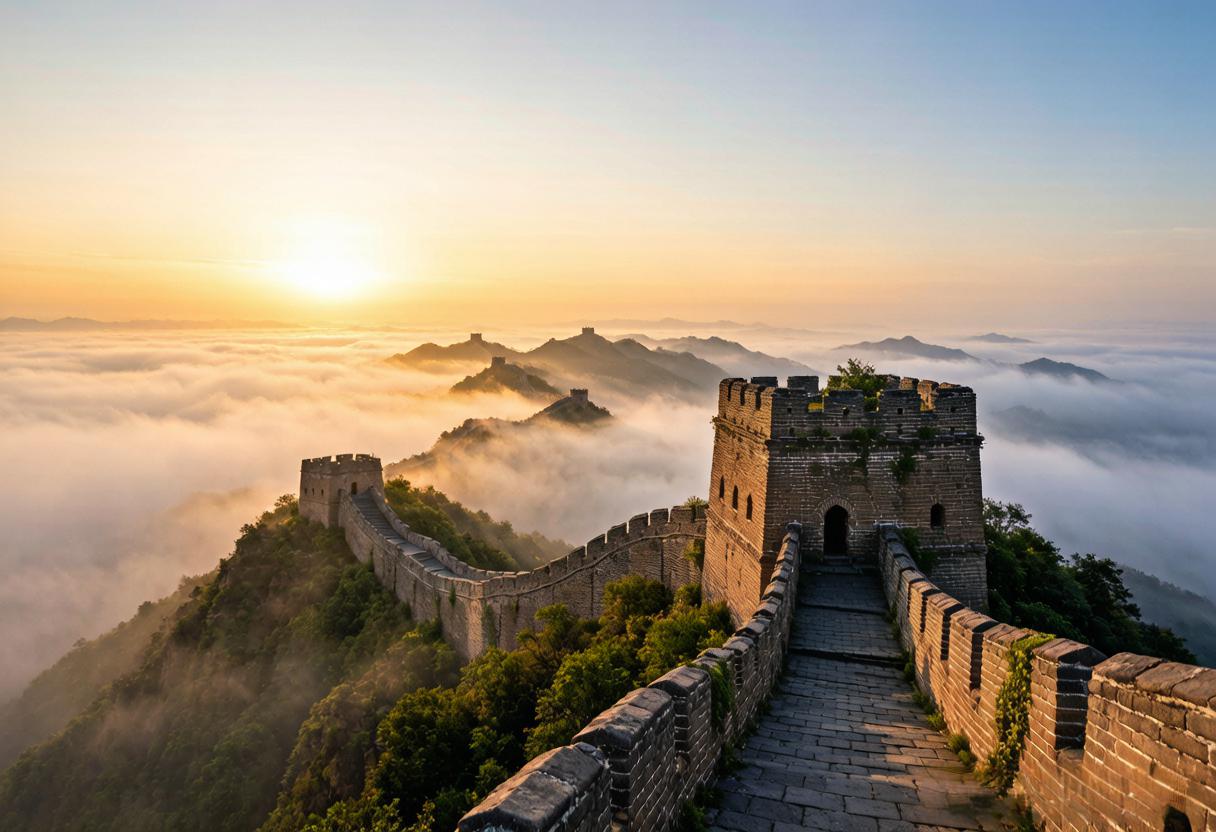
Beijing is the imperial capital. Three thousand years of dynastic history packed into one sprawling, monumental city. The Forbidden City, the Great Wall, the Temple of Heaven. These are the headline acts of any China trip, and they exist here and nowhere else.
Shanghai is the commercial and creative capital. The Bund, the Pudong skyline, the deepest restaurant and bar scene in the country, and the easiest logistics for a first-time foreign visitor. More English on the ground, smoother airport-to-city links, a tourist core that's quicker to figure out.
Most travelers who've been to both will tell you the same thing: do both if you can. They complement each other. Seeing only one leaves you with half the picture of contemporary China.
Get the complete Beijing + Shanghai guide
Attraction details, ticket prices, transport tips, restaurant picks, and day-by-day itineraries for both cities in one PDF. Works offline on your phone.
Get the Complete Guide for $19.99Beijing vs Shanghai at a glance
| Category | Beijing | Shanghai |
|---|---|---|
| Best for | Imperial history, the Great Wall, deep culture | Modern cityscape, food, nightlife, easy logistics |
| Signature sights | Forbidden City, Great Wall, Temple of Heaven, Summer Palace, hutongs | The Bund, Pudong skyline, Yu Garden, French Concession, Shanghai Tower |
| Days needed | 4-5 for the must-sees | 3-4 for the core (more with day trips) |
| Food signature | Peking duck, hot pot, northern noodles | Xiaolongbao, shengjianbao, broadest fine dining in China |
| Climate | Continental: dry, cold winters (-10C), hot summers (35C) | Humid subtropical: damp, mild winters (5-10C), muggy summers |
| Best months | April-May, September-October | April-May, October-November |
| Daily budget | Slightly lower | Slightly higher (skyline dining adds up) |
| English ease | Workable; lean on translation apps more | Easier overall for first-time foreign visitors |
| Nightlife | Hutong bars, live music, alternative scene | Rooftops, cocktails, jazz, widest range in China |
| Day trips | Great Wall sections, Ming Tombs, Tianjin | Suzhou, Hangzhou, water towns of Yangtze Delta |
The two cities' character
This is where the comparison starts to matter. Beijing and Shanghai don't just have different attractions. They have fundamentally different identities.
Beijing: the ancient capital
Beijing has been China's political center for over 700 years. It was the capital for dynasties stretching back to the Warring States period. The city feels weighty. Government buildings, universities, cultural institutions. The pace is slightly slower. Meals are unhurried. People discuss philosophy and politics over baijiu at hutong restaurants that have served the same dish for generations.
The physical city sprawls across a vast area. Monumental architecture, wide boulevards, imperial gardens that span 180 acres. Walking through the Forbidden City, you're inside a space that has been continuously meaningful for 600 years. The hutong neighborhoods retain fragments of pre-modern urban life that are genuine, not reconstructed.
Shanghai: the cosmopolitan port
Shanghai's identity was forged in the treaty port era, when Western merchants, Chinese entrepreneurs, and immigrant communities from across Asia created a hybrid East-West culture called Haipai. That sensibility still defines the city today. Fashion, jazz, fine dining, design, contemporary art. The pace is fast. Meals can be quick. People discuss business and ideas over craft cocktails at rooftop bars that opened last month.
Shanghai is dense and walkable. The core tourist area (Bund, French Concession, Nanjing Road) can be explored on foot in a single afternoon. The visual drama of the Pudong skyline seen from the Bund's Art Deco colonnade is a concentrated summary of China's transformation that Beijing simply doesn't offer in the same form.
Attractions: what each city offers
Beijing
- Forbidden City (RMB 60 peak / RMB 40 off-peak) — 180 acres, 3-6 hours minimum. Book 7 days ahead at 8pm nightly.
- Great Wall (Mutianyu) (RMB 40 + RMB 120 cable car) — 3-5 hours with travel. 90min each way from downtown.
- Temple of Heaven (RMB 15 peak / RMB 10 off-peak) — go early morning to see locals doing tai chi.
- Summer Palace (RMB 30 peak / RMB 20 off-peak) — another 180-acre site. Half a day minimum.
- Hutong neighborhoods — free to wander. Nanluoguxiang for tourists, less-known alleys for authenticity.
- Tiananmen Square — free, but requires advance reservation. Bring passport.
- 798 Art District — free galleries in a converted factory complex.
- Lama Temple (RMB 25) — active Tibetan Buddhist monastery with a 26m sandalwood Maitreya statue.
Shanghai
- The Bund (free) — 1-2 hours. Walk both sides: colonial facades west bank, Pudong skyline east bank at night.
- Shanghai Tower (RMB 220 observation deck) — 632m, highest observation deck in China. Book ahead.
- Yu Garden (RMB 30 peak / RMB 20 off-peak) — 400-year-old classical garden. 1-2 hours.
- French Concession (free) — leafy streets, cafes, boutiques, Art Deco architecture. Best wandering neighborhood in China.
- Nanjing Road (free) — 5.5km shopping strip from the Bund to Jing'an Temple. Pedestrian section is walkable.
- Shanghai Museum (free) — ceramics, bronzes, calligraphy. 2-3 hours.
- Tianzifang (free) — maze of alleys with galleries, craft shops, and cafes in restored shikumen houses.
- Propaganda Poster Art Centre (RMB 20) — fascinating collection of 1940s-1980s political posters.
Verdict on attractions: Beijing wins for historical significance. The Forbidden City and Great Wall are among the most important historical sites on Earth. Shanghai wins for visual impact and walkability. The Bund-to-Pudong skyline experience is concentrated, immediate, and unforgettable. Most travelers find Beijing's attractions more important but Shanghai's more enjoyable on a moment-by-moment basis.
Detailed attraction guides for both cities
Opening hours, ticket booking tricks, transport routes, and skip-the-line strategies for every attraction listed above. All in one downloadable PDF.
Get the Complete Guide for $19.99Food: which city eats better?
This is the category where the comparison gets genuinely close. Both cities have extraordinary food scenes. The answer depends on what kind of eater you are.
Beijing food
- Peking duck — unmatched anywhere. Siji Minfu and Da Dong are the top picks. RMB 150-300 per person.
- Zhajiangmian — Beijing noodles with fermented soybean paste. Hearty, cheap, everywhere.
- Lamb skewers — cumin-spiced, charcoal-grilled. Night markets and hutong restaurants.
- Beijing hot pot — copper pot with clear broth, dipping mutton slices. Different from Sichuan style.
- Hutong street food — jianbing (crepe), baozi (steamed buns), douzhi (fermented bean drink, for the adventurous).
Beijing excels at northern Chinese cooking. Hearty, flavor-forward, deeply satisfying. The hutong night market atmosphere is an experience in itself.
Shanghai food
- Xiaolongbao — soup dumplings with thin wrappers and rich broth. Jia Jia Tang Bao is the benchmark. RMB 10-30 per basket.
- Shengjianbao — pan-fried dumplings, crispy bottom, juicy interior. Street-level comfort food.
- Hong shao rou — braised pork belly in soy and sugar. Shanghai's signature home-cooking dish.
- International dining — the best in mainland China. Michelin-starred restaurants, Japanese omakase, French bistros, specialty coffee.
- French Concession cafes — craft coffee scene that rivals any city in Asia.
Shanghai wins on breadth. More variety, more international options, more fine dining. The broadest restaurant scene in China by a significant margin.
Verdict: Roughly even, with different strengths. Beijing wins on a handful of specific dishes (Peking duck above all) and on street food atmosphere. Shanghai wins on overall food diversity, fine dining, international options, and specialty coffee. If you want to eat predominantly Chinese food, both cities deliver. If you want variety beyond Chinese cuisine, Shanghai wins clearly.
Cost: which city is cheaper?
Surprisingly similar for most travelers. The differences are subtle.
| Expense | Beijing | Shanghai |
|---|---|---|
| Mid-range hotel (central) | RMB 300-600/night | RMB 350-700/night |
| Local lunch | RMB 30-60 | RMB 40-70 |
| Fine dining | RMB 150-300 | RMB 200-400 |
| Attraction tickets (per day) | RMB 60-120 total | RMB 50-220 total (Shanghai Tower is RMB 220) |
| Metro ride | RMB 3-7 | RMB 3-7 |
| Taxi (typical central trip) | RMB 25-40 | RMB 30-50 |
| Didi ride (5km) | RMB 15-25 | RMB 18-28 |
| Daily budget (mid-range) | RMB 700-1,100 | RMB 800-1,200 |
Verdict: Beijing is slightly cheaper day to day, especially for budget and mid-range travelers. The gap widens if you eat at upscale restaurants in Shanghai. For budget-conscious travelers sticking to local food and standard hotels, both cities cost roughly the same.
Weather and the best time to go
The cities have noticeably different climates, and this matters more than most travelers realize.
Beijing climate
Continental, dry.
- Winter (Dec-Feb): Cold and dry. Down to -10C. Coal heating in nearby provinces affects air quality. AQI often exceeds 150.
- Spring (Mar-May): Changeable. Occasional Gobi dust storms. Temperature swings.
- Summer (Jun-Aug): Hot and dry. 32-35C. Great Wall hiking is brutal at peak summer.
- Autumn (Sep-Oct): The standout season. Clear skies, comfortable temps, best air quality. The best time to visit.
Shanghai climate
Humid subtropical, damp.
- Winter (Dec-Feb): Mild but damp. 5-10C. Feels colder than the number suggests because of humidity. No central heating in many buildings.
- Spring (Mar-May): Wet. Plum rain season in June. Pack an umbrella.
- Summer (Jun-Aug): Hot and muggy. 32-35C with high humidity. The discomfort index is higher than Beijing's dry heat.
- Autumn (Oct-Nov): Pleasant. Clear, comfortable, best time to visit. September can still be humid.
Verdict: Both have similar best-month windows. Beijing autumn (September-October) is the single best time for either city. Shanghai's October-November window is equally good. Beijing winter is colder but drier. Shanghai winter is milder but damper and often feels worse indoors (many buildings lack central heating).
English ease and logistics
This category matters enormously for first-time China visitors.
| Factor | Beijing | Shanghai |
|---|---|---|
| Metro English signage | Bilingual (all lines) | Bilingual (all lines, slightly more uniform) |
| Restaurant English menus | Common at tourist sites, rare in hutongs | More common overall, especially in French Concession and Bund |
| English-speaking hotel staff | International hotels: yes. Budget: limited. | More common across all categories |
| Street-level English | Low. Translation apps required. | Moderate. Still need apps, but more people understand. |
| Airport-to-city ease | PEK: Airport Express (RMB 25, 25min) or taxi (RMB 100-150, 45min). PKX (Daxing): further, faster train link. | PVG: Maglev (RMB 50, 8min to Longyang Road) + Metro. SHA (Hongqiao): Metro Line 2/10, very fast. |
| Ride-hailing | Didi works, English interface available | Didi works, English interface available |
| Walking navigability | Low. Attractions are spread across a vast area. Metro between most. | High. Core tourist area is concentrated and walkable. |
How many days does each city need?
This is the question that determines everything else. Here's the honest breakdown.
Beijing
4-5 days minimum.
Everything in Beijing is big, spread out, and deserves more than a rushed photo. The Forbidden City alone is 180 acres. The Great Wall is 90 minutes each way. This city punishes rushed itineraries.
Shanghai
3-4 days for the core.
Shanghai is dense. The core tourist area can be covered in two focused days, but the city rewards slowing down. The food scene alone justifies extra time.
Day trips and surroundings
Both cities have excellent day trips, but in completely different categories.
| City | Day trip | Travel time | Why go |
|---|---|---|---|
| Beijing | Mutianyu Great Wall | 90 min each way | Less crowded than Badaling, better scenery, toboggan ride down |
| Beijing | Ming Tombs | 60 min each way | Imperial tomb complex, Sacred Way with stone animal statues |
| Beijing | Chengde Mountain Resort | 2h by high-speed rail | Qing dynasty summer palace, vast imperial garden, temples |
| Beijing | Tianjin | 30 min by high-speed rail | Colonial architecture, riverfront, street food |
| Shanghai | Suzhou | 30 min by high-speed rail | Classical Chinese gardens (9 UNESCO sites), canals, silk culture |
| Shanghai | Hangzhou | 45-60 min by high-speed rail | West Lake, tea plantations (Longjing), mountains, temples |
| Shanghai | Zhujiajiao Water Town | 60 min | Ancient canal town, stone bridges, boat rides, willow-lined waterways |
| Shanghai | Nanjing | 1h by high-speed rail | Ming dynasty capital, city wall, Sun Yat-sen Mausoleum, street food |
Verdict: Beijing wins if the Great Wall is the single day trip you care about most (it's the most photographed attraction in China). Shanghai wins on diversity: Suzhou, Hangzhou, and water towns offer very different experiences from the city itself, and they're all accessible within an hour by train.
Day trip guides with transport details
Exact train numbers, station names in Chinese, ticket booking instructions, and where to eat at each day trip destination. All in the Complete Guide PDF.
Get the Complete Guide for $19.99Nightlife and atmosphere
Beijing nightlife
- Hutong courtyard bars — hidden bars in converted courtyard houses. Intimate, atmospheric, hard to find without directions.
- Live music scene — alternative rock, indie, jazz in converted factories and underground clubs. School Bar (wudaokou), DDC (art district), Jianghu Bar.
- Sanlitun — expat and embassy district bar strip. Familiar to Westerners, but less interesting than the hutong spots.
- Night markets — Donghuamen Night Market and Ghost Street (Guijie) for late-night eats.
Shanghai nightlife
- Rooftop bars — the signature Shanghai experience. Flair (Ritz-Carlton), Sir Elly's (Peninsula), Bar Rouge on the Bund. RMB 120-180 per drink, worth it once.
- French Concession bars — cocktail bars, wine bars, and jazz clubs tucked into leafy lanes. Speak Low (speakeasy), Union Trading Co.
- Bund-side jazz — the Peace Hotel's Old Jazz Band has been playing since the 1980s. The musicians are in their 70s and 80s.
- Nightlife district — Xintiandi for upscale, Found 158 for clubbing, Yongkang Road for cheap drinks and street atmosphere.
Verdict: Shanghai wins for range, quality, and atmosphere. The rooftop bars and jazz bars are genuinely world-class experiences that don't exist in Beijing in the same form. Beijing wins for the hutong courtyard bar experience, which is unique and atmospheric in its own way but less polished. Nightlife is one of the clearest reasons to choose Shanghai.
Can you do both in one trip?
Yes, and you should if you have seven days or more. The Beijing-Shanghai high-speed rail makes the combination practical.
The ideal Beijing-Shanghai combined itinerary
| Days | Split | What you get |
|---|---|---|
| 7 days | 3 Beijing + 3 Shanghai + 1 transit day | Highlights of both cities. Rushed but doable for first-timers. |
| 8-10 days | 4 Beijing + 3-4 Shanghai + 1 transit day | Comfortable pace. Deep dives into both cities. One day trip. |
| 10+ days | 4-5 Beijing + 4 Shanghai + 2-3 days Xi'an | The classic 3-city route. Beijing, Xi'an (Terracotta Warriors), Shanghai. The best first-timer itinerary in China. |
How to travel between Beijing and Shanghai
- High-speed train (recommended): 4.5 hours. RMB 553 second class, RMB 933 first class. Beijing South Station to Shanghai Hongqiao Station. Trains every 30-60 minutes. Book on Trip.com up to 30 days ahead.
- Flight: 2 hours flying time, but add 3+ hours for airport procedures. Total time often equals or exceeds the train. Only cheaper on deep-sale prices.
- Overnight train: 12-14 hours. Saves a night's accommodation. Soft sleeper available. Less comfortable than the day train.
Decision guide: pick your city
Here's how the Beijing-Shanghai decision breaks down by traveler type.
You want imperial history and the Great Wall
The Forbidden City, the Great Wall, the Temple of Heaven. These aren't just tourist attractions. They're among the most historically significant sites on Earth. If classical Chinese civilization is the reason you're going, Beijing has no competition anywhere.
You're on a tighter budget
Beijing runs slightly cheaper day to day. More budget hotel options in central locations. Attraction tickets are lower (Forbidden City RMB 60 vs Shanghai Tower RMB 220). Local restaurants are slightly cheaper. The gap is modest, but it exists.
You love exploring neighborhoods and street food
Hutong alleyways, morning tai chi in Temple of Heaven park, night markets that have operated for decades. Beijing's street-level culture is deeper and more atmospheric than Shanghai's. If you travel to wander, not just to check off landmarks, Beijing rewards this more.
You want modern, cosmopolitan China
The Pudong skyline, the deepest restaurant and bar scene in the country, design and fashion districts, specialty coffee that rivals any city in Asia. If you want to see what 21st-century China looks like at its most dynamic, Shanghai is the showcase.
It's your first visit to Asia and you want an easier on-ramp
More English, more walkable core, more internationally oriented services. If you're nervous about navigating a Chinese city as an English-only speaker, Shanghai is genuinely more manageable for a first visit.
Food is a major reason you travel
Shanghai's food scene is broader and deeper than Beijing's. More variety, better international options, the best fine dining in mainland China. The xiaolongbao alone are worth the trip, and the French Concession cafe scene adds days of exploration.
You have 7+ days
The contrast between the two cities is the point. Beijing-Shanghai is the most rewarding city pair in China. Seeing only one gives you half the picture. The high-speed train makes the combination easy. Start in Beijing, end in Shanghai.
Plan your Beijing-Shanghai trip with confidence
Our Complete Guide covers both cities in detail. Attraction prices, hours, booking tricks, restaurant picks, metro navigation, day trip logistics, and sample itineraries. Works offline on your phone.
Get the Complete Guide for $19.99